
Go Your Own Way

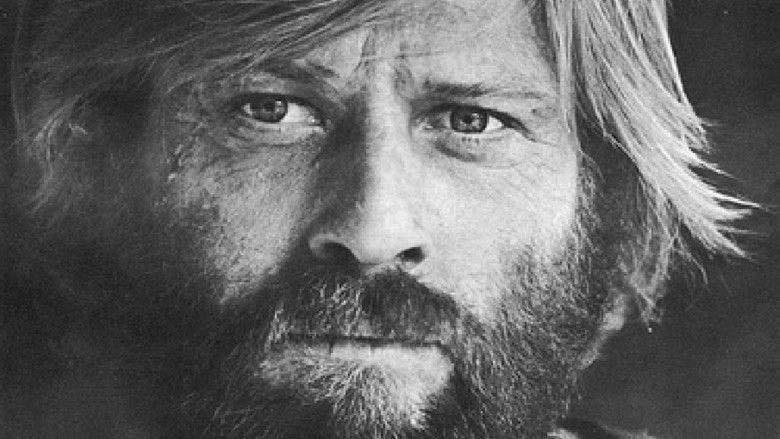
Jeremiah Johnson is a 1972 film starring Robert Redford. Jeremiah represents a composite of many true stories of men who left “civilization” to become Mountain Men. In this story, Jeremiah is a veteran of the Mexican-American War who arrives in the Rocky Mountains painfully inexperienced, nearly dies learning the most basic requirements of survival, falls into an unlikely family through a series of circumstances he never sought, and learns that he has a capacity for violence he never knew was there.
Once a year for the past three decades, I watch this movie. It is beautifully shot, historically accurate, and well-scripted but that’s not why I watch it. I watch it as a reminder of what it costs to go your own way. Johnson does not find himself in the mountains. The mountains dismantle every version of himself he brought with him and create him into a version of himself that “civilization” would never have awakened.
Going your own way has been so thoroughly romanticized by films, by self-help culture, by the mythology of the lone genius striking out against convention, that the actual cost of it has become almost impossible to see clearly until you are already paying for it. Johnson learned this first hand when his fantasies of freedom and self-discovery and arrival were shattered by harsh realities, leaving something that looks considerably more like loss, disorientation, and a sense of homelessness.
Carl Jung once described it this way in a letter to someone:
One lives as one can.
There is no single, definite way for the individual which is prescribed for him or would be the proper one.
If that’s what you want you had best join the Catholic Church, where they tell you what’s what.
Moreover this way fits in with the average way of mankind in general.
But if you want to go your individual way, it is the way you make for yourself, which is never prescribed, which you do not know in advance, and which simply comes into being of itself when you put one foot in front of the other.
That’s the kind thing they don’t tell you about being an entrepreneur, a creative, a digital nomad, a van-lifer.
Putting one foot in front of the other is the only answer to the perpetual temptation to quit. But there’s a scientific reason why.
The gravitational pull of systems
Every system you belong to was designed to keep you in it. The closer you are to the center of a system, the more force it exerts on every decision you make, every identity you construct, every version of the future you allow yourself to imagine. This is systemic physics that becomes psychology. The system does not need to threaten you or punish you or even disapprove of you to keep you in orbit, at least not at first. It simply needs to remain massive enough that leaving requires more energy than you currently believe you possess, and most people, most of the time, decide the escape velocity is too high and adjust their trajectory and expectations accordingly.
The cost to free yourself from almost any system is more than most people can bear. I am sure this is what Kris Kristofferson meant this lyric from “Me and Bobby McGee”:
“Freedom is just another word for nothing left to lose.”
The line sounds like liberation until you feel the weight of what he meant by it; something more precise and more brutal: the moment you achieve actual freedom from a system is the moment the system has finished taking things from you. You are free because you have lost the belonging, the certainty, the lineage, the identity the system provided.
The freedom and the loss are not sequential. They are the same event, experienced simultaneously. And it may all be exhilarating and adventurous, but there is nothing romantic about it.
Systems I have left
I certainly never experienced anything as physically daunting as what Jeremiah Johnson did. But I did experience three leavings from systems that gave me much of my identity.
The first was choosing to not to be a part of my family’s ranching business. Gratefully, I didn’t receive a ton of pressure to be a part of it, but it was still a painful choice.
The second was leaving structured Christianity. The church I grew up in and spent the first 20 years of my adult life had a cult-like gravitational pull. We warned repeatedly about what happened to people who “lost out”.
The most recent one was the decision to leave the US - at least for now. This experience is probably the closest to the feelings that Jeremiah Johnson experienced. I’m grateful for Virginia and having the resources to adapt to Mexico, but being an immigrant is an enormous challenge unto itself.
Each system I left has become its own symbol of the courage it took to leave it. I will never return to that church or any church system, and that particular door closing is its own kind of symbol; the one departure with no corresponding nostalgia, only clarity. The others do hold sacred memories and gratitude and lessons, but being there feels like “borrowed boots”.Here is a line from a poem I wrote of the same name:
Being here feels like wearing borrowed boots, not from another man but the man I used to be. They nearly fit, and that nearly is everything about how much I’ve changed.
A man returns to a place he left and finds the place unchanged, himself unrecognizable, the way a river looks familiar in its features, but strange in its weight, recognized by the banks but carrying entirely different water.
I reckon that Jeremiah would recognize that sentiment, if and when he ever returned to where he left.
What it takes to go your own way
Jeremiah Johnson did not become fearless in the mountains. He became someone who learned to function inside fear, which is a completely different education and a far more useful one. The mountains rewarded him with learning to survive under conditions he only partially chose, and it took from him everything that was expendable, which turns out to be most of what he thought was essential.
Jeremiah taught me many things that I will pass on to you about what it takes to go your own way.
Stop shitting on survival mode. The self-improvement industry has monetized the idea that fear and disorientation are signs of dysregulation requiring intervention before the real work can begin. Survival mode is your nervous system doing its job accurately when the conditions are genuinely threatening, and the person grinding through it is paying more honest attention to reality than the person radiating equanimity from doing yoga retreats or cold plunges or glamping. There is nothing wrong with any of those of course, unless they are teaching you to survive a system you are supposed to leave.
Get used to insecurity. Jeremiah rode into the Rockies ill-equipped for the harsh realities and a determination that the wilderness found almost comically insufficient. He nearly starved. He nearly froze. He survived his first winter largely because a stranger took pity on him and a dead man’s rifle and supplies kept him alive. As Jeremiah’s skills grew, the insecurity and uncertainty of life in the wild was the permanent texture of reality, and the sooner he stopped waiting for it to resolve, the sooner he could begin building the actual capacity the mountains required. That capacity came only from surviving uncertainty repeatedly, making decisions with incomplete information, finding out afterward whether he read the situation correctly, and doing it again with whatever he learned. There was no curriculum for this. The mountains were the curriculum.
Stay humble. One of my mantras is “Nature kills pretense”. Nature doesn’t give a shit about your beliefs, your theories, or your opinions. It also reveals the fragility and uselessness of what you think you know. In the movie, Bear Claw Chris Lapp did not ask Johnson what he already knew. He watched him fail and then showed him the essentials of survival, and Johnson had the good sense to listen rather than defend his prior assumptions. The mountains will educate you whether you cooperate or not, and the version of humility you arrive at on your own terms costs considerably less than the version it eventually imposes without your consent. Cooperating with the correction early, before nature makes it mandatory, is the only form of intelligence that compounds over time.
Learn the old ways, but build your own systems. Jeremiah first had to learn from people and practices that had existed in those mountains long before he arrived with his assumptions and his romantic ideas about solitude. He did not inherit those practices wholesale. He absorbed them one painful mistake at a time and then rebuilt them into something functional for the specific man he was becoming in the specific terrain he was learning to inhabit. The old ways gave him the grammar but he had to write his own sentences. Borrowing ancient wisdom without integrating it into your own reality produces reverence without function. Building your own systems without grounding them in what has survived centuries of human reckoning produces novelty without roots. Both will get you killed. Learning to balance the two will make you a true bushcrafter.
Protect your capacity. After Johnson loses his family, the mountains and their indigenous inhabitants do not offer him a period of recovery. They were still there the next day, and the days after that, and each day held the requirement to remain functional enough to survive each one. Capacity is clarity, and without clarity you over-index both hope and despair, mistaking your exhaustion for insight and your depletion for discernment, making the decisions that matter most from the worst possible vantage point while believing you are seeing clearly. Rest is the condition under which good judgment becomes possible, and treating your own depletion as virtue is a slow way of losing the ability to tell the difference between what the road requires and what your fear is manufacturing.
The oldest teacher
Eventually and painfully, Jeremiah re-discovered the world’s most ancient teacher: his own intuition. Of course, Jeremiah had to learn how to survive first. That took instincts and skills. But what led him beyond instinct was his own intuition.
In going your own way, your intuition is your most valuable asset, which is why the war against her has been so thorough and so well-funded.
She is the voice and the guide to the heart, the one who makes the mind a precision instrument for nuance, discernment, and critical thinking rather than a processing plant for other people’s urgency.
She is the mother of autonomy, creativity, wisdom, and clarity, the four faculties that make a human being most like a god and most dangerous to any system requiring compliance, exhaustion, and confusion to function.
She makes you ungovernable, and when you listen to her, you stop being a viable consumer and become a genuine threat to institutionalism and authoritarianism alike. Every algorithm, every manufactured urgency, every stimulant sold as information exists to consume the interior silence where she lives. What you need is to listen to what you already know, and that listening is an act of defiance so fundamental that the entire attention economy was engineered to prevent it.
A different kind of confidence
Despite the tension and the tragedies, there is a lot of humor in this movie. The old trapper laughed at him. The natives laughed at him. Even the animals that wanted to eat him seemed to laugh at him. And in the end, Jeremiah learned to laugh at himself. And that is the final lesson: you must learn to laugh at your own foolishness and even at fate.
“Confidence is the willingness to be as ridiculous, luminous, intelligent, and kind as you really are, without embarrassment.” — Susan Piver
When you find that deeper confidence on the other side of laughter, you have arrived in your own way. Or better said, you have arrived at the perpetual arriving of going your own way.
At the end of the movie, a Crow warrior raises his fist to Jeremiah. The salute is neither reconciliation nor threat. It is the acknowledgment from a fellow warrior that Jeremiah had proven himself worthy of respect. The warrior recognizes that the wilderness in all of her forms did everything it could to break him, and he is still there, still riding, still himself.
The deepest validation of going your own way does not come from the people who supported you or the systems that approved of you. It comes from the forces that tried to stop you, when they finally raise their fist because you absorbed the full cost of going your own way.
There is no arrival when going your own way. But you do reach a place of the kind of inner confidence and faith that Jung, Kristofferson, and Piver were pointing toward: the willingness to remain fully yourself under conditions designed to unmake you. Then and only then do you have “nothing left to lose”.
Love it!
Posted at just the right time for me. I’m leaving a “system” this month that will require Jeremiah strength, resolve, and perseverance.