
Pull the Thread

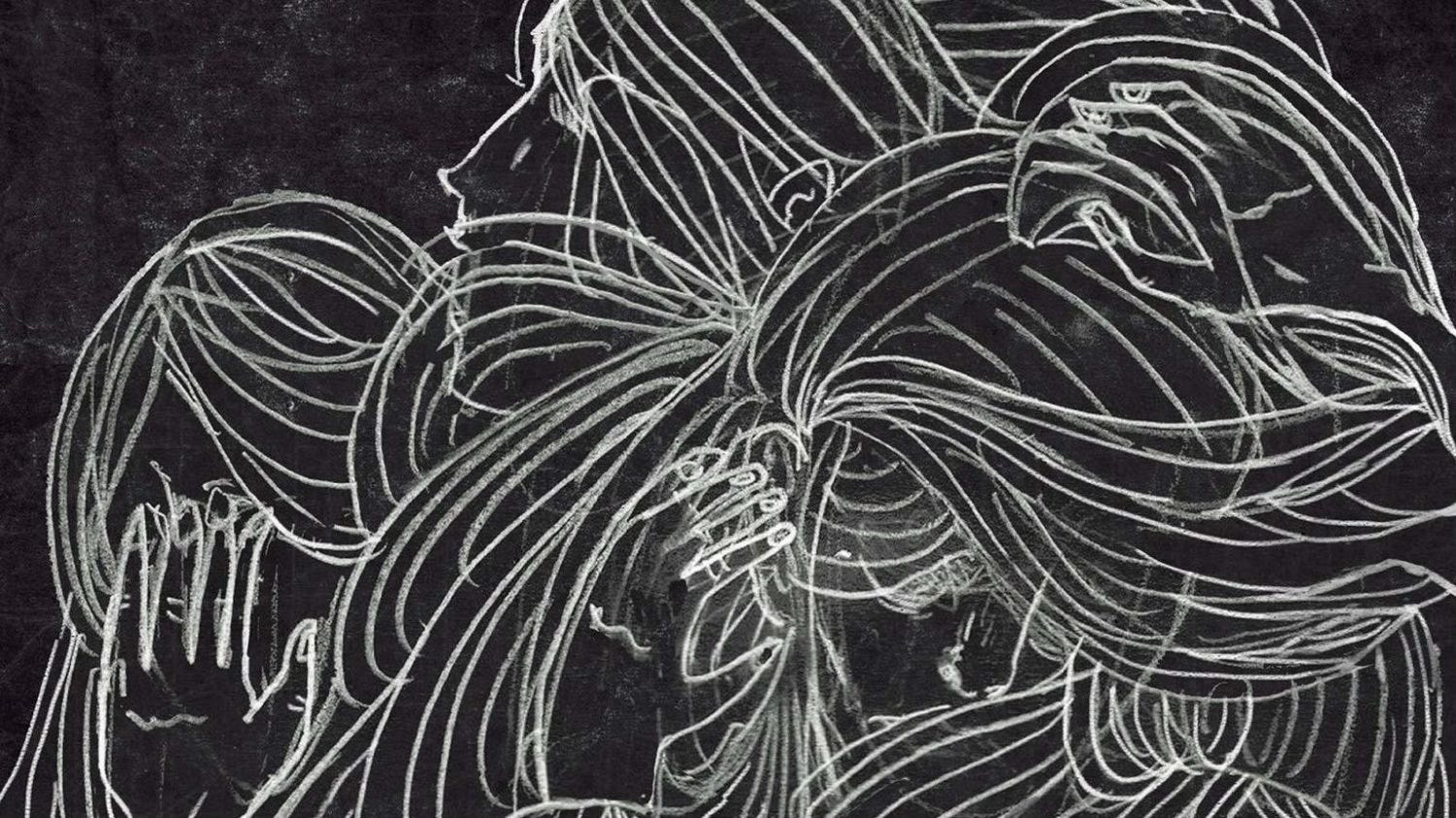
I arrived in this life with my curiosity dial turned to “10”, but in conditions that made being curious dangerous. I watched adults the way a tracker watches land; noticing the forced friendliness at church, the performative righteousness at potlucks. Everything was steeped in certitude. The set had been built. Everything felt staged for God and neighbor. My young mind drew maps from expressions, pauses, and the way questions were treated with furrowed brows and fearful eyes.
Two, sometimes three, times a week, I’d sit in church. When I wasn’t daydreaming about being anywhere else but there, I listened and tested the proclamations and absolutions for truth. A God who required perfect loyalty and swift discipline felt more human than holy. A real God, I sensed, favored wonder over fear. Those ideas did not go over well in a culture designed to submit to doctrine and condemn questions and outside ideas as being from “the world”.
The Adam and Eve story was often repeated. Hunger for knowledge, lose paradise. A serpent raises a question and becomes a villain. A woman seeks understanding and becomes a cautionary tale. Church doctrine framed this story as moral clarity. My young mind interpreted it as fear of thinking. If Eden required ignorance, what kind of paradise was it?
“Curiosity killed the cat,” was also a constant warning from society; spoken with humor yet rooted in fear. No one mentioned that the cat often returned with a smile, covered in scars and stories. School shifted the scenery yet repeated the same note: stay in line. Teachers valued neat desks and rote answers. History text praised one event and glazed over another. “Why was Columbus treated like a hero when he was responsible for the death of so many people?” I asked questions like this with sincerity, then watched as teachers sighed through tight smiles and wrote polite comments about “strong inquisitive tendencies.” I wore the label with private pride.
Over the decades, I learned to balance curiosity with at least a perception of compliance. I challenged authority and paid for it, but I also protected the part of me that was insatiably curious. I made sure that most of my explorations into the greater questions were kept a secret.. Over time that created a split life: the visible me playing by the rules enough to get through the day, and the private me thinking, watching, wondering, longing. I carried that tension for years.
By my mid 40s, the gap between my inner truth and my external hologram reached a point where staying hidden felt impossible. Curiosity demanded to breathe, to be seen, to be heard. So I stopped hiding the questions. I stopped hiding the real me. I left everything behind that had tried to suppress this curiosity and let my soul, the source of all this curiosity, breath free air. Being openly curious about everything was my first of many liberations.
I traveled a long way from that watchful child who learned to guard his questions. I now make curiosity the center of my life. It is my core belief, my first behavior, the most sacred part of my being. Curiosity is also the essence of my coaching, but I do not teach curiosity. I help people find and embrace the curiosity they already have. Curiosity opens perception. It turns inherited belief into lived understanding and converts obedience into awareness. When curiosity rises, a person sees with their own eyes, thinks with their own mind, and steps into life with presence. Every other form of inner freedom follows that first movement. That’s why I call curiosity the ultimate “killer app”.
Three Parables
As I mentioned, curiosity is often condemned as being “dangerous”. The irony is that it is dangerous, but not to you. It is dangerous to the systems and manufactured realities that benefit from your obedience.
But life is always full of threads to pull; each inviting an unraveling. Here are three parables to consider.
The Believer
She sits in church on a humid Sunday, sweat on the back of their neck, bulletin folded into a neat square. The preacher talks about obedience again. Same cadence. Same warnings. Same promises. She has believed every word her whole life because belief gave structure, and structure kept fear quiet.
Mid-sermon, something in her body shifts and an urgent question whispers from within: If God is love, why does this feel so small?
Her pulse jumps. Her hands tighten around the bulletin. Her throat grows thick, and a strange tenderness blooms in her chest; a tenderness that feels more sacred and more real than the sermon. Awareness grows within her; heat and trembling rising. She realizes she has prayed for safety rather than connection, and she tastes the ache of wanting a God who trusts her to think, feel, and change.
The unraveling begins in small, painful steps. She ducks out early and drives home in silence. She skips church for a few weeks to see if the feelings go away. They don’t. But she goes back one last time. Familiar faces tilt their heads with concern. Someone says something passive aggressively about how much she was missed. She leaves and never goes back.
She begins to wake early and pray without words. Her breath slows. Her fear dissolves. She feels a presence that does not demand pretense, and she trusts it. Faith shifts from obedience to intimacy, from following orders to meeting something holy in ordinary life. A new shine arises in her eyes. Her laugh is honest. So are her tears.
The Rationalist
He finishes a long day analyzing numbers and checking his lists until everything feels precise. He likes precision. It keeps chaos far away. He repeats his days like this. He convinces himself that it’s comfortable but there is a growing knot in his stomach (he doesn’t believe in a soul) that seems to glow on its own. He decides to spend some time with this feeling. Surely there’s a reason for this feeling. He relies on his trusty mind to find an explanation. For the first time, his mind can only find a question, no answers. And the question settles down to this: What arrives before thought?
Curiosity ignites before indignation can protect him. Awareness rises like a tide in his chest, confusing and undeniable, yet also clear. He grapples with the paradox. A deeper intelligence begins to move inside him, and he feels scared, humbled, and awake in the same breath.
The unraveling arrives through embarrassment, doubt, and real fear. A colleague smirks when he mentions the experience. A friend jokes about buying some crystals. He feels his identity loosen and wobble, and they grieve the simple world where reason ruled everything and curiosity was just a small tool in the toolbox.
He trusts the process. It has to be a process, right? And he learns to dance with paradox; to hold wonder and logic in the same hand and feel stronger for it. His mind grows wider and his confidence now comes from taking risks rather than intellectual superiority. They feel more human, and they trust that more than certainty.
The “Safe Choices” One
She lived safe for many years, praised for discipline and admired for poise. Her entire life was neat and orderly. She excelled at being agreeable, responsible, and predictable, and people rewarded her composure without realizing how much it cost her. Desire slept beneath the routines she mastered. Creativity waited in the silence she maintained. She called this steadiness maturity, and the world applauded her for it, yet a quiet hunger lived in her chest and her hips and her imagination, asking for something real.
On a restless evening, she signed up for a local painting class without a grand reason, only a small inner tug she chose not to ignore. The first night smelled of turpentine and waiting potential. She picked up a brush and felt a strange, warm current rise along her spine, as if her body recognized an old language. Then she noticed her. A woman across the room with paint on her fingers, eyes that held effortless depth, her body lithe and fluid. She felt a pull to this woman that was beyond physical attraction. It was intense, unsettling, and … a word she never used, delicious. The question arrived in a voice that felt ancient and tender: What if desire contains wisdom?
Awareness bloomed in her body with heat and clarity. She painted with breath instead of thought. Her chest opened. Her hips grounded. She felt sensation and creativity as one force, rising through her like a devotional current. The sight of that woman laughing with paint-splattered hands stirred her, not only sexually, but spiritually and artistically. She wanted to feel, to see, to touch color and skin and meaning with presence. She stayed with the heat, the ache, and the curiosity without numbing it.
Unraveling arrived with consequence. Her friends teased her about “going through a phase.” Her partner, a man she had a safe and predictable life with, questioned her sanity and her loyalty. Fear rose and trembled in her ribcage, trying to pull her back into compliance. She cried in her car after class once, overwhelmed by hunger and possibility, afraid of losing stability yet more afraid of losing this awakening.
New life took form through sensation, art, and self-trust. She broke things off with her partner. Not to pursue this new person but to liberate herself to paint, literally and figuratively, in bold strokes and tender lines. She allowed desire to guide her hand and her breath. She learned pleasure as intelligence and creativity as prayer. She felt alive in her womb, her heart, and her spirit. She didn’t see the woman again, but felt the call to honor her role in being a catalyst that awakened her fire, her beauty, and her sovereign hunger for a life lived awake.
Curiosity and Evolution
Curiosity in each of these lives produces spiritual evolution, psychological growth, and human authenticity. In each case, curiosity became a story of liberation because curiosity’s main function seems to be sacred rebellion. It honors truth over tradition and integrity over image. It approaches existence with open attention rather than defensive certainty. A curious person meets belief without submission and mystery without superstition. Curiosity places the soul in direct relationship with reality. That relationship creates dignity, and dignity creates power.
No authoritarian structure celebrates these outcomes. That is why authoritarian systems invest heavily in obedience. Corporations invest heavily in SOPs. Political machines invest heavily in fear. Every institution that thrives on control faces a real threat from a human being who laughs freely, asks honest questions, and trusts lived truth more than external approval.
My childhood church taught submission as virtue. My spirit discovered that curiosity builds reverence of a different scale. Reverence for life. Reverence for consciousness. Reverence for the strange intelligence humming through existence with no interest in human rules. Curiosity never drags people away from the sacred. In fact, it’s quite the opposite.
For curiosity to do its work, you have to spot a thread (there are thousands of them) and pull it. If you don’t, there is no curiosity to dissolve illusion. There’s no curiosity to question ideas, frameworks, your own thoughts. There’s no curiosity to challenge “luxury beliefs”. There’s no curiosity to take you to places that your ego would never even dream of.
So… pull a thread. Not once, but as a practice.
Embrace the paradox.
Laugh at both certainty and anxiety.
Taste existence with both seriousness and play.
Trust your inner scientist and your inner monk equally.
If one thread and pull it. See what unravels. See what is revealed. See what you learn about yourself.
Thanks, this one of your best.
Thank you, Justin, for this rich human tapestry, made more grand by pulling the threads in curiosity. I love your writing, your personhood, your work.