

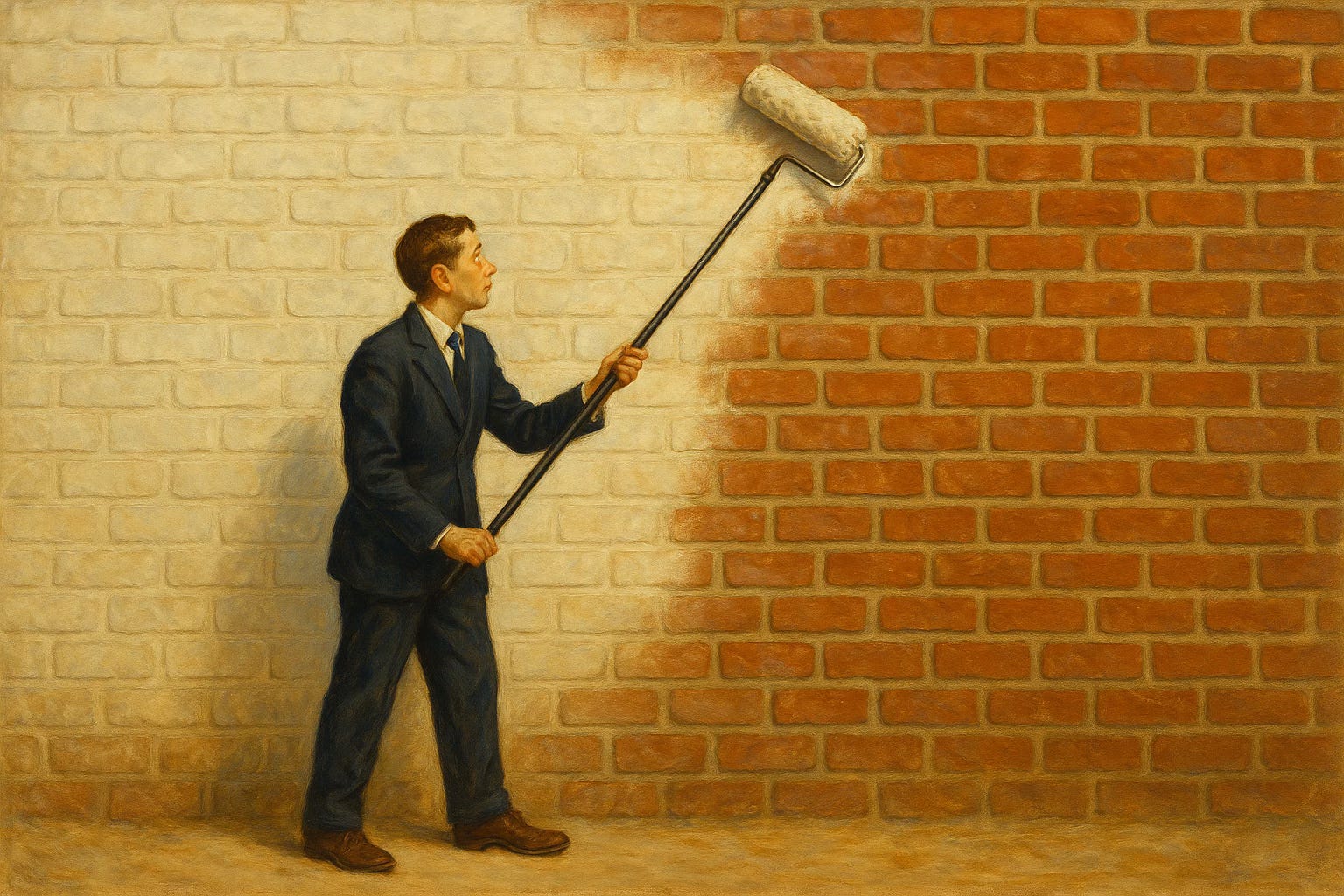
It has been said that the victors write history. That was probably true when the only mediums were oral traditions and books. But today, history is more accessible than ever. You don’t have to be misinformed. You don’t have to assume what you were taught in school is accurate. To steal a phrase from the anti-expertise crowd, you can do your own research.
Yet here we are on October 13. After a 4-year hiatus of honesty where this date was referred to as Indigenous Day, this day is back to being called Columbus Day.
If you would like a longer history of the original intentions of this day, I strongly encourage you to read Heather Cox Richardson’s piece about it. As with everything she writes, it is an eloquent prosecution of willful ignorance. And unless you want to ragebait your own sanity, I suggest you do not read Trump’s proclamation about this day.
I want to use the backdrop of October 13 to bring up and examine a bigger issue that is true in therapy, relationships, and history itself:
When you lie about history, you lie about everything else.
The American Archive of Lies
Every nation mythologizes its origins, but few do it with such a persistent mix of denial and arrogance but the American record of history is filled with distortions, omissions, and rewritten scripts that protect the psyche of those who benefit from them.
Let’s start with the lie that has likely caused more harm to other people than any other lie in US history: that the United States was founded as a “Christian nation.” The founders were deeply suspicious of institutional religion, especially its use as a political cudgel. Jefferson literally cut the miracles out of the Bible. Franklin was a deist. Washington avoided church like a dentist’s office. Yet, Christian nationalists continue to sell the idea that divine endorsement came with the Constitution.
The “Christian nation” myth has served as a permission structure for harm since the first colonists arrived. It provided the language for the slaughter and displacement of Indigenous people. It sanctified the trade in human beings and the violence used to sustain it. It shaped centuries of law that privileged belief systems aligned with power and punished those that did not.
Its legacy runs through every era. It underwrote segregation and lynching. It turned gender hierarchy into divine order. It inspired campaigns against artists, teachers, and scientists who expanded the boundaries of truth. It continues to animate policies that target queer families, reproductive autonomy, and any form of thought that challenges control. Each of these acts carries the same signature: the claim that domination fulfills God’s plan.
This lie shows up in several other lies…
The lie that book bans protect children. Book bans have never protected anyone from harm; they have only protected authority from accountability. From the Salem witch trials to McCarthyism to the MAGA school boards of today, America’s moral panic machine keeps manufacturing new enemies to justify authoritarianism. The targets shift with the decades: communists, queer people, witches, “woke” teachers; but the methods remain the same. The truth is that every banned book is a confession of insecurity and only fragile minds need censorship to feel safe.
The lie that sexuality is a threat. The Puritan imagination did not vanish; it metastasized into policy. Abstinence-only programs, “don’t say gay” laws, purity culture, each a bureaucratic attempt to legislate shame. The American obsession with suppressing sex reveals a terror of authenticity. Because sexuality, when liberated, exposes hypocrisy. Walt Whitman, Audre Lorde, James Baldwin, the Stonewall rioters, they all told the truth about desire, and that truth threatened an empire built on repression. Sexual freedom terrifies moral authoritarians because it dissolves their power over the body and, by extension, the soul.
Which leads to the biggest lie of all: that America’s past is behind us. Slavery, genocide, colonization, internment, segregation, these are not historical footnotes; they are operating systems still running in the background of our institutions. Voter suppression, mass incarceration, land theft, economic apartheid, and cultural erasure are all updates of the same software. The illusion of “progress” serves the same purpose as denial in an addict, to postpone responsibility.
“The most effective way to destroy people is to deny and obliterate their own understanding of their history.”
― George Orwell
The White Identity Crisis
So what’s the big deal, Justin? Why can’t you let people just have their whitewashed history?
Because lying about history is an identity crisis that harms other people.
When a culture refuses to face its past, it fractures its sense of self. This is the essence of white fragility. It’s the emotional panic that erupts when historical truth threatens inherited comfort. The outrage over the 1619 Project, the book bans targeting racial education, the fury over land acknowledgments, all of it reveals the same wound: the fear of losing a myth that made white people feel righteous.
This is especially true among native-born white men. For generations, we were handed an identity built on hero narratives: pioneers, warriors, inventors, saviors. Many now claim that telling the truth about history is some kind of threat (this is the main complaint behind White Replacement Theory). But it isn’t erasure, it’s evolution. It’s history self-correcting. The problem is that many white men were never taught the difference.
When your history is a highlight reel of your own identity, honesty feels like an attack on you. Watch how the conversation shifts when someone mentions systemic racism, patriarchy, or Indigenous genocide. The reaction is rarely curiosity. It’s defensiveness, mockery, or retreat.
The Rootless Republic
A tree without roots is easily blown over. A culture without honest history is just as fragile. Lying about history is the social equivalent of Jesus’ parable about a foundation built on sand.
Rootlessness looks like constant rebranding. “Heritage.” “Values.” “Traditional America.” These phrases attempt to fill the void left by unacknowledged history. They pretend that roots are the same as nostalgia. But nostalgia is memory without responsibility.
This is why the American psyche feels like, as a Black friend once told me, “a culture but no roots”. When your foundation is myth, you are always defending something that never truly existed. And that’s exhausting. It creates the spiritual fatigue you can see in the angry dad at the school board meeting or the keyboard warrior raging about “wokeness.” The lie has to be protected because the truth would dissolve the identity it sustains.
In therapy, this would be called denial. In politics, it’s called “heritage.” Both are strategies for avoiding the pain of growth. But pain is how we evolve. A nation, like a person, either faces its shadows or gets consumed by them.
To rebuild an authentic identity and to create true unity, white America must reroot itself in honesty. That means accepting the complexity, the contradictions, the shame, and the brilliance of our collective past. It means honoring Indigenous sovereignty, confronting the economic legacy of slavery, and reclaiming the radical diversity that has always been the country’s creative engine.
History Through the Eyes of the Wounded
If you want to understand the soul of history, study it through the eyes of those who suffered most from it. The stories read differently from beneath the boot.
Columbus Day is a perfect case study. From the perspective of empire, it celebrates exploration and courage. From the perspective of Indigenous and formally enslaved people, it marks the beginning of centuries of genocide, displacement, and forced erasure. The same event, two realities. One triumphant, one catastrophic.
When you study history from the margins, the myths crumble fast. You begin to see how language itself is a form of colonization. Textbooks once called Indigenous societies “primitive.” The word translated difference into deficiency. It turned thriving cultures with advanced systems of governance, agriculture, and spirituality into caricatures that justified conquest.
Looking through the eyes of the oppressed doesn’t just shift your emotional allegiance; it changes your moral geometry. You start to see that history is not a linear march toward progress, but a series of collisions between dominance and dignity. You realize that what has been framed as “civilization” often required the systematic destruction of other civilizations.
This way of seeing history has nothing to do with making white people feel guilty (although the aforementioned Ben Franklin did say that the “Sting of rebuke is the truth”). It’s about restoration. It reconnects the story to its full depth. It brings context and dimensionality. When you study the past through the eyes of those who endured it, you are practicing historical empathy. You are allowing the dead to speak in their own tongue.
The Archaeology of Truth
Sure, you can study history by going to a museum. But it is more useful to see it as a living excavation site. Each generation digs, brushes away dust, and discovers what the previous one buried. The goal is not to preserve a pristine myth but to reveal a living and evolving truth.
The two best tools for this kind of excavation are critical thinking and curiosity.
Critical thinking is how we test the stories we’re told. It’s the intellectual version of carbon dating. When you encounter a historical claim about religion, race, sexuality, or politics, ask where it came from, who benefits from it, and what it leaves out. That process alone can change how you see everything.
Curiosity is the emotional twin of critical thinking. It keeps us humble. It reminds us that knowledge is never complete and certainty is usually a form of fear. Curiosity lets us approach history as a conversation instead of a courtroom. It opens space for nuance, empathy, and surprise.
Final Thought
Even the history we live firsthand bends and warps as time passes. Memory organizes experience into stories that feel complete but rarely are. Every account, even our own, is seen through a dirty and distorted lens. Critical thinking and curiosity invite us to see beyond those distortions. They turn history from a record of facts into a living inquiry. They remind us that truth is rarely pure or final, that understanding grows through conversation and contradiction.
So, on this October 13, as white supremacists rebrand torture as “tradition,” take a moment to look inward. Ask what stories you inherited, what versions of history you absorbed without question, what truths you have yet to face. History is not a loyalty test; it is a mirror. Each time we study it with honesty, we reclaim a piece of our humanity.
When we tell the truth about history, we begin to tell the truth about ourselves.
And that’s where the real liberation begins.